

Soil Mixer
Product Overview
The industrial Soil Mixer is a heavy-duty mechanical blending system engineered for commercial greenhouse operations, wholesale nurseries, substrate manufacturing plants, and automated potting facilities. It uniformly integrates variable bulk components—such as peat moss, compost, perlite, vermiculite, coir, and agricultural amendments—while introducing controlled moisture levels.
Positioned upstream of potting lines, plug-tray fillers, and substrate bagging systems, the equipment eliminates manual mixing inconsistencies, prevents local nutrient hot spots, and stops material stratification. Selection is determined by matching material physical properties, required moisture content, and target hourly throughput.


Technical Specifications
|
Model |
Nominal Capacity (L) |
Operational Throughput (m³/h) |
Mixing Motor Power (kW) |
Water Pump Power (kW) |
Discharge Height (mm) |
Dimensions (L × W × H, mm) |
Machine Weight (kg) |
|
SM-1000 |
1,000 |
15–25 |
11.0 |
0.75 |
850 |
2,600 × 1,200 × 1,500 |
1,450 |
|
SM-2000 |
2,000 |
30–45 |
18.5 |
1.10 |
950 |
3,200 × 1,500 × 1,750 |
2,200 |
|
SM-3000 |
3,000 |
50–70 |
30.0 |
1.50 |
1,100 |
3,800 × 1,800 × 1,900 |
3,100 |
Technical Operating Notes

Capacity Definition
Listed capacities reflect nominal trough volume, calculated at a standard operational filling ratio of 60% to 70%.

Throughput Variance
Throughput ranges are based on continuous or batch cycle times under typical organic substrate bulk densities (0.4–0.6 t/m³). Actual processing capacity varies with moisture content and material particle size.

Custom Configurations
Continuous-flow arrangements, automated weighing integrations, and Grade 304 stainless steel material-contact components are available as engineered options.
Mixing Design and Working Principle
1. Mixing Mechanism
The machine utilizes a synchronized twin-shaft counter-rotating paddle configuration (or single-shaft ribbon design depending on model selection). Staggered paddle angles generate an active fluidization zone in the center of the mixing trough. This mechanical action forces materials into mutual contact, effectively locking lightweight elements (such as perlite) into the heavier, damp organic matrix to prevent stratification.
2. Moisture Addition System
To achieve uniform hydration across hydrophobic dry organic fibers, an integrated stainless steel water manifold injects metered water directly into the shear zone.
Water Supply Requirement: Operates at a minimum pressure of ≥ 0.3 MPa.
Atomization: Pressurized water is delivered through flat-fan atomizing nozzles to create a fine spray curtain.
Control: Monitored via an inline digital flow meter connected to the central control panel for repeatable water-to-substrate ratios.
3. Drive System and Wear Components
Power Transmission: Heavy-duty helical bevel gear reducers coupled with TEFC electric motors, housed within IP55/IP65 industrial enclosures.
Wear Resistance: Agitator assemblies feature hardened steel paddle blades with tungsten carbide-coated edges. Blades are bolt-mounted to high-strength drive shafts, allowing rapid inspection and replacement without full drivetrain disassembly.
Applications and Material Compatibility
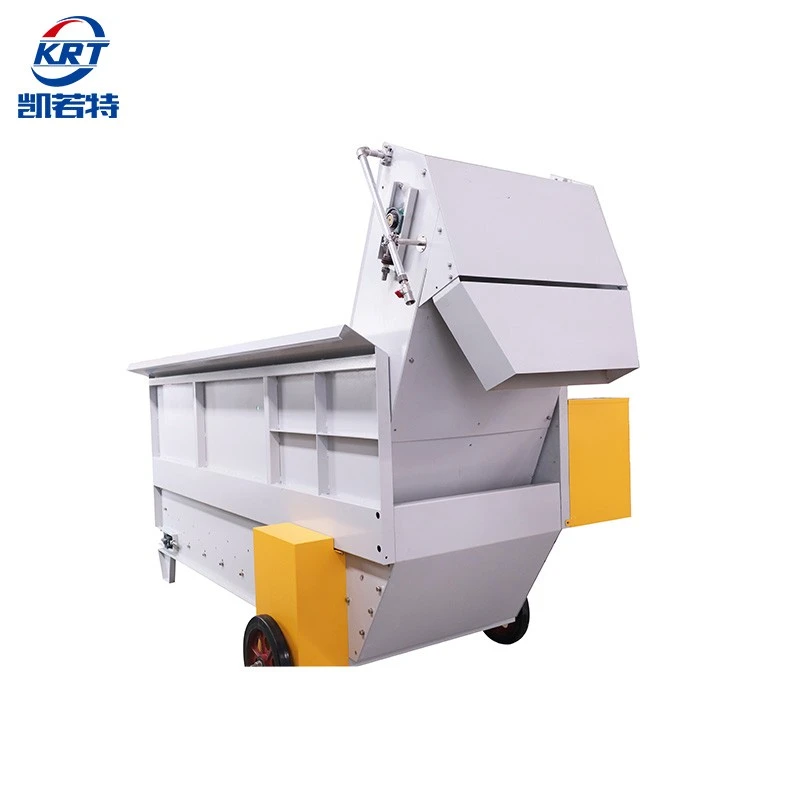
The industrial soil mixer is engineered for high-volume preparation across multiple horticultural sectors.
Greenhouse & Nursery Substrates: Blending base components prior to automated pot-filling or plug-tray seeding lines, ensuring consistent bulk density and aeration.
Commercial Potting Mix Production: Preparing large-batch growing media formulations for bulk transport or bagging operations.
Compost & Fibrous Material Processing: Handling peat-based blends, coir pith, and composted bark. Machine geometry and high-torque drives break up fibrous clumps, provided material moisture levels remain within standard processing thresholds (30% by volume), ensure the specification includes upgraded atomizing spray manifolds and moisture-resistant internal lining options.
Plant Integration: Measure vertical drop clearances to ensure the discharge height clears downstream hoppers, conveyors, or bagging machinery without requiring auxiliary incline lifts.
Frequently Asked Questions

Request a Quote
To receive a formal technical proposal and quotation tailored to your production requirements, please submit the following operational details.
Target Substrate Components & Ratios: (E.g., peat moss, perlite, coir, bark, compost)
Required Hourly Throughput or Batch Volume: (m³/h or L/batch)
Target Moisture Addition Rate: (Percentage of water added by weight or volume)
Downstream Equipment Integration: (Potting line, tray filler, bagging machine, or bulk hopper)
On-Site Electrical Supply: (Voltage and frequency standards)
As one of the most professional soil mixer suppliers in China, we're featured by quality products and good price. Please rest assured to buy high-grade soil mixer for sale here from our factory. Contact us for more details.
growing media mixer, soil nutrient mixer, soil preparation mixing machine